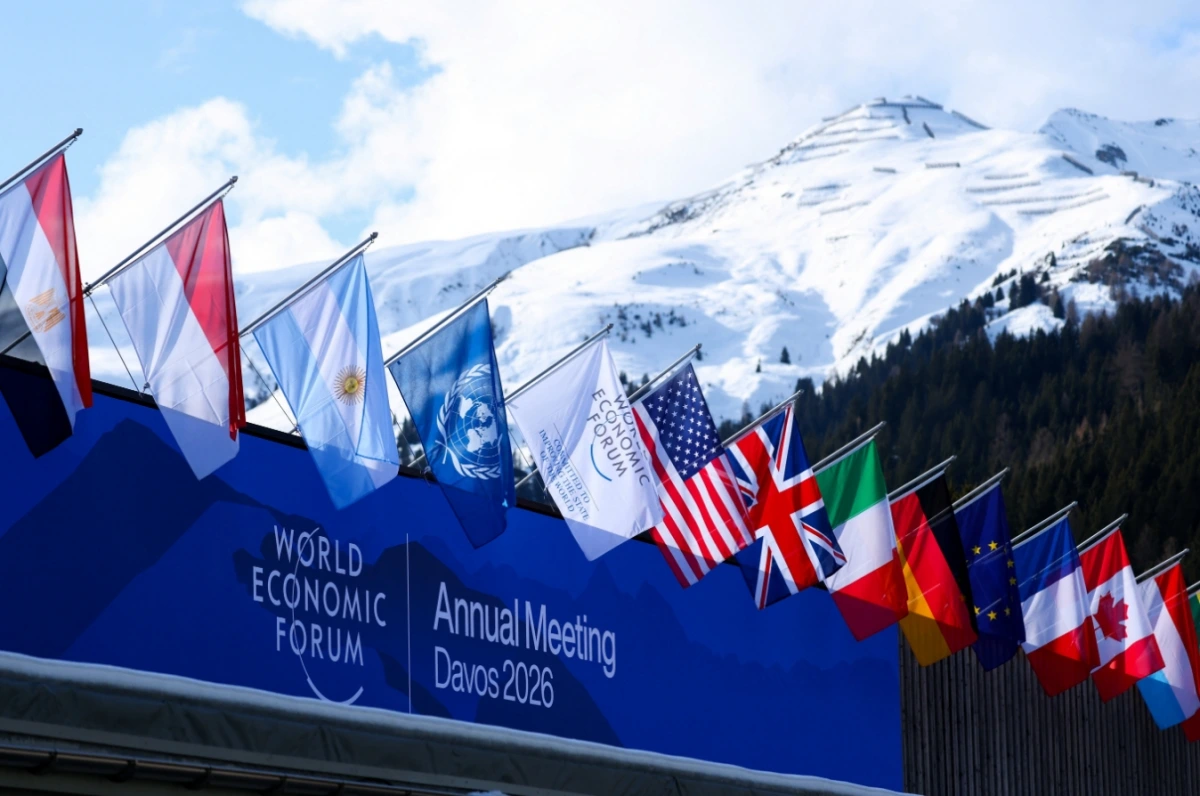
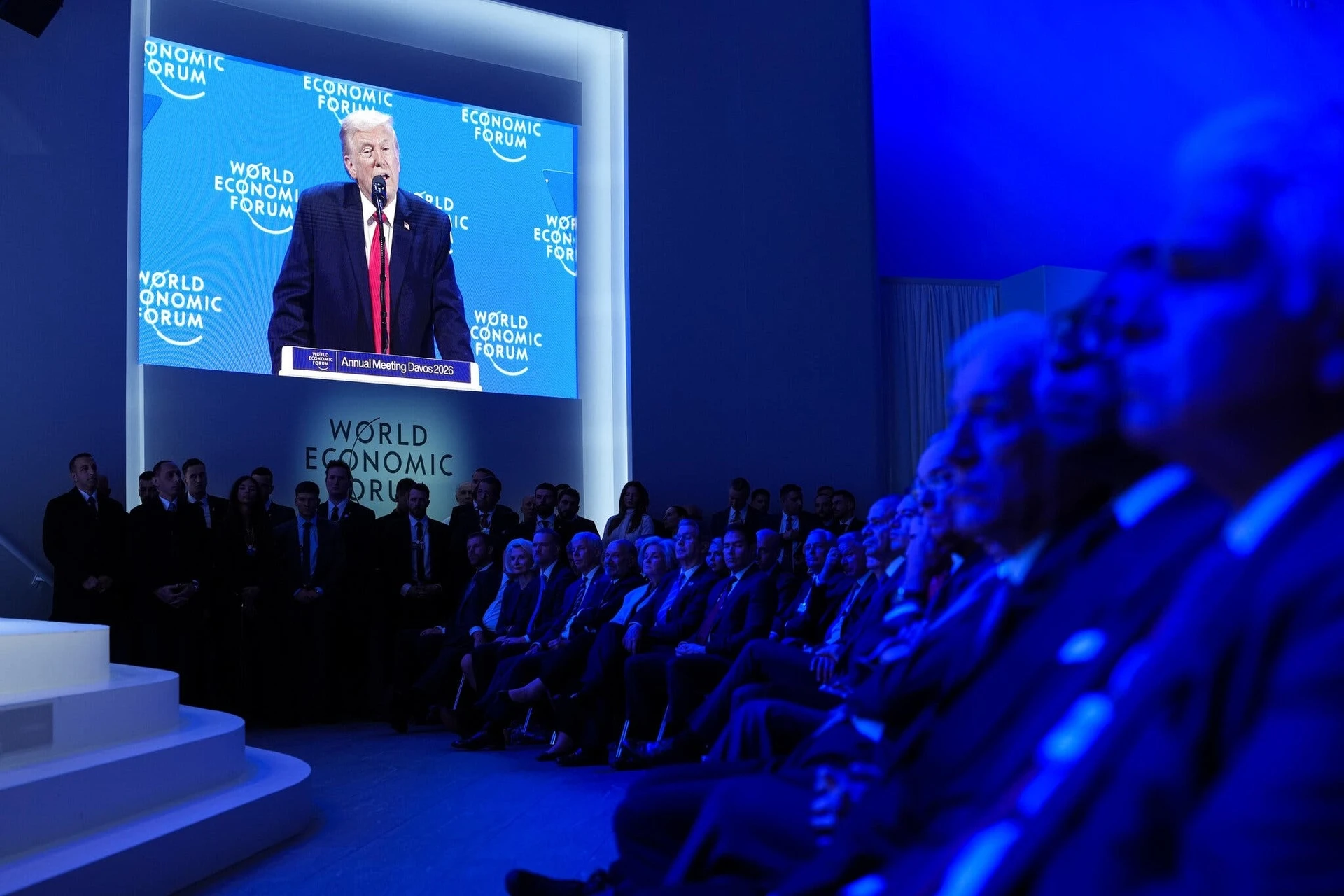
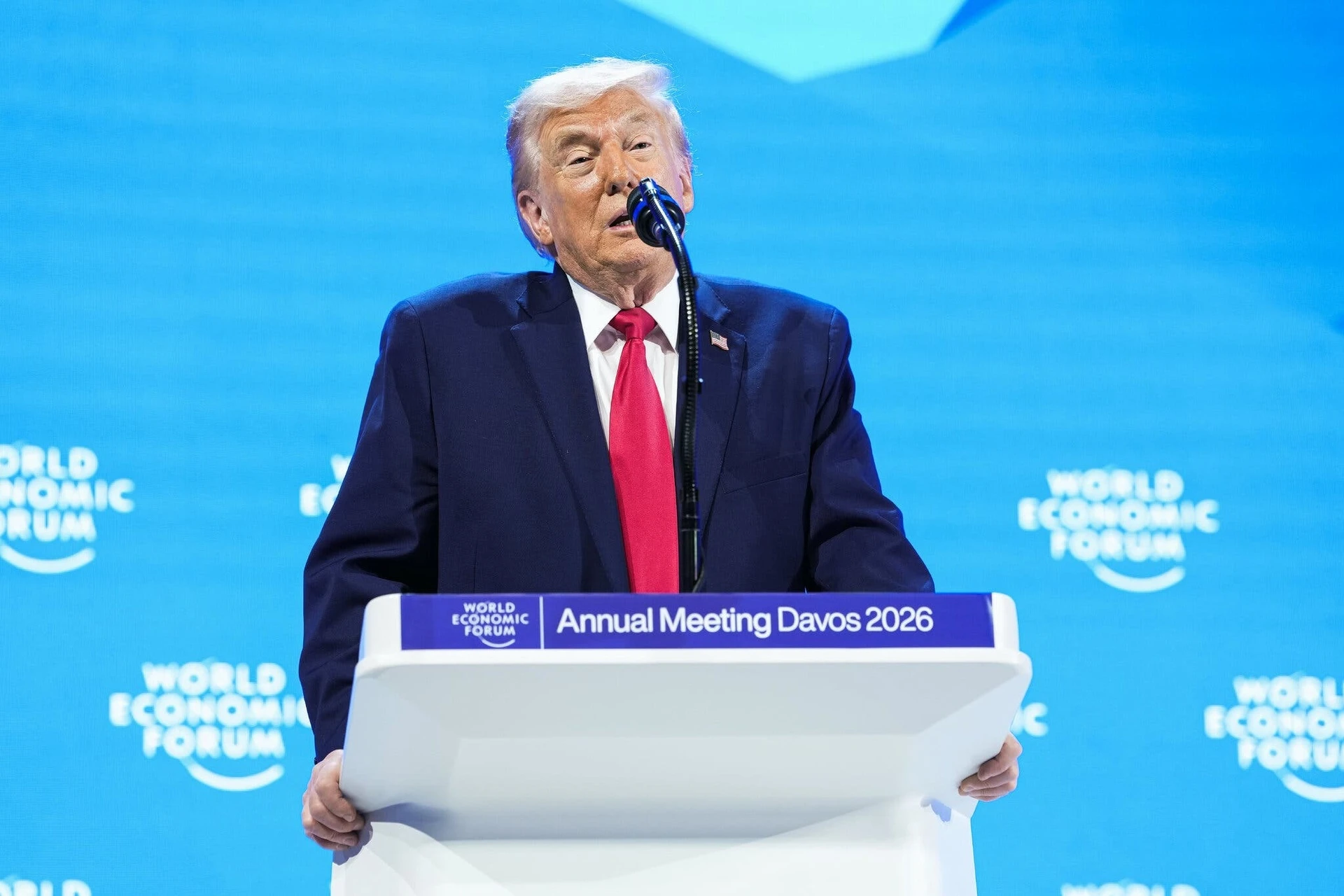
U.S. President Donald Trump announced a bold new proposal aimed at addressing the skyrocketing energy demands of artificial intelligence (AI) by allowing American tech companies to build their own power plants, including nuclear facilities, to directly supply electricity to AI data centers. The announcement was made during a public address at the World Economic Forum in Davos, Switzerland on January 21, 2026.
Under the plan, the U.S. government would significantly shorten the approval process for energy projects — with permits for gas-fired plants issued within two weeks and nuclear plants within three weeks, compared with the traditional timeline of four to five years required by the U.S. Nuclear Regulatory Commission (NRC). This rapid licensing is intended to help tech firms avoid reliance on the nation’s aging electrical grid and instead secure dedicated, reliable power sources for AI operations.
“You are very talented and have a lot of capital. You can build your own power plants,” Trump told leaders of major technology firms, emphasizing that energy supply must keep up with the rapid expansion of AI computing infrastructure.
Rationale Behind the Move
Trump framed this proposal as a response to what he described as a critical energy bottleneck in the U.S., where AI workloads are driving unprecedented power consumption.
He warned that existing energy infrastructure could become a significant economic risk if it fails to keep pace with demand.
“We need twice the amount of power we have now just to run AI facilities,” he said, highlighting the pressure that large data centers place on the grid.
By empowering tech companies to construct their own energy infrastructure, including nuclear generation, the administration hopes to stimulate private investment while accelerating the deployment of high-capacity, low-carbon power sources.
Debate and Reaction
While nuclear power offers the advantage of high output with minimal greenhouse gas emissions, critics have raised concerns about the safety and environmental implications of such expedited approvals. Under current NRC rules, nuclear projects undergo extensive review to ensure stringent safety standards - a process that typically stretches over years. Many energy analysts argue that collapsing this timeframe to weeks could undermine critical oversight, particularly for complex nuclear facilities.
Industry observers have also questioned whether ultra-fast approvals are realistic or advisable, noting that even smaller modular reactors (SMRs), which are touted as simpler and safer alternatives, still often require nearly two years of regulatory review.
Long-Term Energy Goals
The Trump administration has set an ambitious goal of expanding the U.S. nuclear power capacity to 400 GW by 2050 - roughly four times current levels - as part of its broader energy strategy. Nuclear energy is seen by both the Trump and previous Biden administrations as a crucial element for meeting climate targets while providing reliable baseload power.
However, the proposal underscores broader tensions in U.S. energy policy, particularly regarding the balance between rapid technological growth, environmental safeguards, and regulatory integrity.
Context
This move comes amid growing recognition that the energy demands of AI - especially for training and operating large neural networks - are reshaping how industries think about power infrastructure. Some tech giants previously explored partnerships with nuclear facilities to secure stable, low-carbon electricity, while others have advocated for expanding renewable sources to meet long-term needs.
![[Events] Vice President of HR at KMS Technology to join Leader Talks: Fostering Diversity and Equity in Tech Workplace](https://vcystvqnqlquncjkhfqk.supabase.co/storage/v1/render/image/public/cm86yzxje006dqu90iz4rc2vg/Users/528093_imagejpeg?width=600&quality=80&resize=contain)
![[Events] Leader Talks: “Inclusive Leadership: Fostering Diversity and Equity in the Tech Workplace”](https://vcystvqnqlquncjkhfqk.supabase.co/storage/v1/render/image/public/cm86yzxje006dqu90iz4rc2vg/Users/94476_imagejpeg?width=600&quality=80&resize=contain)
![[Latest News] Vietnam’s NIC Director: NIC Has the Mandate to Attract Meta, Google, NVIDIA & Qualcomm](https://vcystvqnqlquncjkhfqk.supabase.co/storage/v1/render/image/public/cm86yzxje006dqu90iz4rc2vg/Users/511693_imagejpeg?width=600&quality=80&resize=contain)
![[Latest News] Vietnam Tops the World in Creative Goods Exports](https://vcystvqnqlquncjkhfqk.supabase.co/storage/v1/render/image/public/cm86yzxje006dqu90iz4rc2vg/Users/560777_imagejpeg?width=600&quality=80&resize=contain)
![[Latest News] CyberCon Asia 2025 Cybersecurity Event Discusses “AI versus AI”](https://vcystvqnqlquncjkhfqk.supabase.co/storage/v1/render/image/public/cm86yzxje006dqu90iz4rc2vg/Users/659822_imagejpeg?width=600&quality=80&resize=contain)
![[Events] Invitation to join the Women in Tech® Vietnam Delegation to the Women In Tech APAC Summit 2025](https://vcystvqnqlquncjkhfqk.supabase.co/storage/v1/render/image/public/cm86yzxje006dqu90iz4rc2vg/Users/26163_imagejpeg?width=600&quality=80&resize=contain)
![[Events] Advisory Board & Executive Board Regular Meeting of Women in Tech® Vietnam (WIT) and Women Tech Entrepreneurs (WTE)](https://vcystvqnqlquncjkhfqk.supabase.co/storage/v1/render/image/public/cm86yzxje006dqu90iz4rc2vg/Users/897421_imagejpeg?width=600&quality=80&resize=contain)
![[Latest News] Vietnam’s Growing Prominence in Cybersecurity: Host of ACM AsiaCCS 2025](https://vcystvqnqlquncjkhfqk.supabase.co/storage/v1/render/image/public/cm86yzxje006dqu90iz4rc2vg/Users/8666_imagejpeg?width=600&quality=80&resize=contain)
![[Latest News] Ho Chi Minh City’s Innovation Startup Center Opens as New Ecosystem Hub](https://vcystvqnqlquncjkhfqk.supabase.co/storage/v1/render/image/public/cm86yzxje006dqu90iz4rc2vg/Users/523193_imagejpeg?width=600&quality=80&resize=contain)
![[Events] The Art of Sake: Connecting Businesses & Cultures](https://vcystvqnqlquncjkhfqk.supabase.co/storage/v1/render/image/public/cm86yzxje006dqu90iz4rc2vg/Users/210348_imagejpeg?width=600&quality=80&resize=contain)